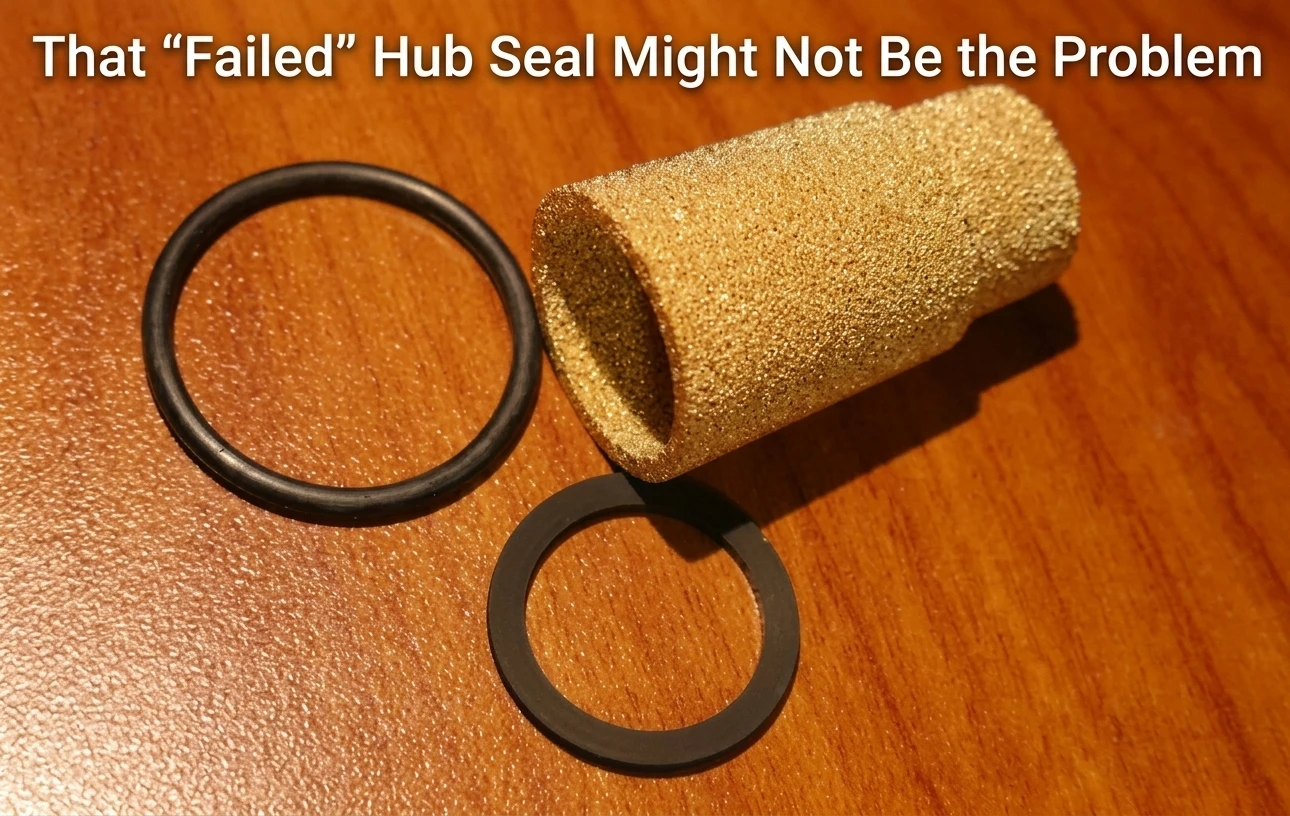
That "Failed" Hub Seal Might Not Be the Problem
Posted by Jim Strong on Oct 22nd 2026
Why Your Final Drive Seal Keeps Failing: Check the Case Drain
You replace a leaking final drive seal, refill the hub, and get back to work. Then the leak comes back. Before you blame the replacement seal, there's something else worth checking: the case drain.
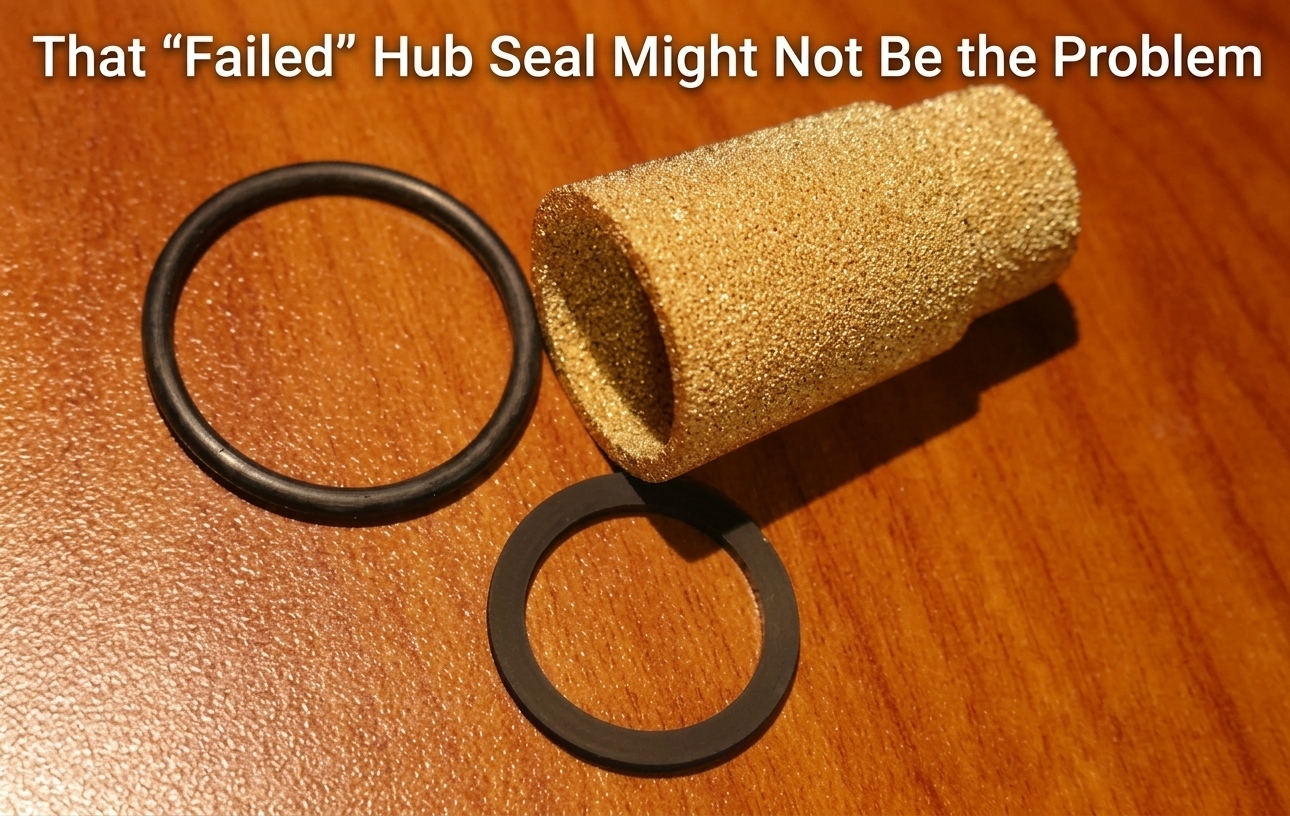
A restricted case drain can start a chain of problems that ends with hydraulic oil getting into the planetary hub and leaking out behind the sprocket, as we've explained in our Bobcat 337 troubleshooting article. Let's walk through that chain so you know what to investigate before paying for the same repair twice.
A Little Internal Leakage Is Normal
Inside a piston-type travel motor, some hydraulic fluid leaks past the rotating group's working clearances during normal operation, and that fluid helps lubricate internal components. So internal leakage isn't automatically a sign that your motor is worn out.
That oil collects in the motor hub and returns to the hydraulic tank through the case drain line, sometimes through an inline filter (TFD's guide to final drive ports). The important part is giving it a clear path back to the tank.
Working Pressure and Case Pressure Are Different Things
It's easy to assume that a motor handling thousands of psi can tolerate plenty of pressure anywhere inside it. But the working circuit and the motor housing have very different pressure limits, as the Bosch Rexroth A6VM specifications show. For that motor family, nominal working pressure is 350 bar, or about 5,075 psi, while allowable continuous case pressure across the full speed range is just 2 bar, or about 29 psi (Bosch Rexroth A6VM technical data). That's a big difference.
Those aren't universal numbers for every final drive. For comparison, Danfoss Series 40 motors have a published continuous case-pressure limit of 1.7 bar, or 25 psi, which is another reason to use the specifications for your particular motor.
What Happens When the Case Drain Can't Drain?
A clogged filter can restrict the return path and raise pressure inside the motor housing. That's why troubleshooting should include the drain circuit, not just the seal where you can see oil escaping.
Start with the filter, if the machine has one, and inspect the hose routing and connections against the service manual. Look for a pinched or kinked hose, and if there are quick-couplers in the circuit, verify that they're correctly connected and fully engaged.
Excessive case pressure can damage seals, gaskets, and housings, a risk specifically identified in the Danfoss Series 90 technical manual. Don't assume the pressure has to get anywhere near normal working pressure before there's a problem.
In a final drive with separate hydraulic and planetary compartments, excessive case pressure can damage the internal shaft seal and let hydraulic oil enter the gear hub. The seal doesn't have to pop completely out of its bore for that leakage to start.
And once hydraulic oil gets into your gear hub, it can mix with the specified gear oil and compromise lubrication, putting the gears and bearings at serious risk. This isn't just a matter of wiping up a little oil.
That continuing supply of hydraulic oil can also leave the hub overfilled and contribute to leakage behind the sprocket. By then, your visible leak may be several steps removed from the original problem.
Why Replacing the Hub Seal May Not Fix It
For this failure scenario, you'll want to keep two seals straight: the internal shaft seal separates the hydraulic and planetary compartments, while the external floating face seal keeps lubricant in the hub. They're doing different jobs.
Imagine replacing only the external seal while the internal shaft seal is still leaking, and the case drain is still restricted. You've addressed where oil gets out, but not why hydraulic oil keeps getting in. That's the repair trap to avoid.
This doesn't mean every leaking hub seal points to a clogged case drain; ordinary seal wear is another possibility. It means you should check the cause instead of assuming the visible leak tells the whole story.
What to Check Before Replacing Another Seal
Use the machine's service manual to guide the inspection, and leave running pressure and flow tests to a qualified technician. Shut down, secure the machine, and relieve pressure according to the manufacturer's procedure before opening the hydraulic system.
-
The filter and drain path: Check the specified filter, if fitted, along with the hose, fittings, and connections. Don't use the color of the case drain filter alone to decide whether the circuit is clear.
-
Case pressure: Have a technician measure pressure at the specified location and operating conditions, with the normal drain circuit connected. A temporary test route could bypass the restriction you're trying to find.
-
Gear oil level: Check it using the correct plug position and procedure. If the hub keeps gaining oil without anyone adding it, investigate where that extra oil is coming from.
-
Case drain flow: Compare the measured flow with the manufacturer's specification under the required test conditions. Don't substitute a generic flow limit for the correct service data.
Keep pressure and flow separate in your thinking. Our sister company Texas Final Drive has a final drive diagnostic guide that distinguishes restricted drainage that raises case pressure from excessive drain flow that can indicate internal motor wear.
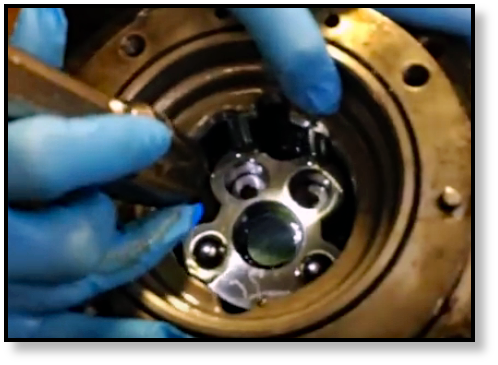
Fix the Cause Before Putting It Back to Work
Follow the manufacturer's case drain filter service schedule, and check the drain circuit before installing a repaired or replacement drive. Remember that a restricted case drain can expose your replacement motor to the same damage as the one you just removed.
The takeaway is simple: don't stop at the part that's leaking. Find out why it's leaking, fix the underlying problem, and give the repair a chance to last.
When Did You Last Change Your Case Drain Filter?
If your answer is "I'm not sure," make checking the service record your next step. Don't wait for a leak to put that filter back on your radar.
If your machine has case drain filters, give them their own line on your maintenance checklist. Write down the filter part number, the date and machine hours at replacement, and when the next service is due under the manufacturer's schedule. Set a reminder so you're not relying on memory. It could save your final drive motor.
Final Drive Parts recommends replacing case drain filters when you replace the other hydraulic filters, as explained in its case drain maintenance advice. Use hydraulic service as a reminder to review the case drain filters too, while following any earlier or more specific requirements in your machine's manual.
Order Your Case Drain Filter Before You Need It
Got a filter change coming up? Call Final Drive Parts at 281-259-5267 to confirm the correct case drain filter and availability, then place your order. Have your machine's make, model, serial number, and existing filter part number handy so you can check the match before ordering.
Frequently Asked Questions
Why does my final drive seal keep leaking after replacement?
One possibility is that the repair addressed the external leak without fixing a restricted case drain or a damaged internal shaft seal, allowing hydraulic oil to keep entering the gear hub (TFD's case drain explanation). Don't assume another seal is the answer until the cause has been checked.
How does hydraulic oil get into the planetary hub?
In final drives with separate hydraulic and planetary compartments, hydraulic oil can pass through a damaged internal shaft seal, and excessive case pressure is one possible cause of that damage (TFD's final drive diagnostic guide). Check the drain circuit as part of the investigation, rather than treating the seal as an isolated failure.
Can a clogged case drain filter ruin a final drive?
Yes, a clogged filter can raise case pressure enough to cause serious seal and internal component damage. If your machine has one, keep its inspection and replacement on the maintenance schedule.
How much case drain pressure is too much?
Use the limit for your specific motor; for example, the Danfoss Series 40 manual lists 25 psi continuous and 75 psi for intermittent cold-start conditions. Don't apply those numbers to a different motor or treat the brief cold-start allowance as an acceptable everyday reading.
Is a case drain flow test the same as a pressure test?
No, pressure testing checks pressure in the housing, while flow testing measures drain flow, with excessive flow potentially indicating internal leakage from wear. They answer different questions, so one shouldn't replace the other.
Frequently Asked Questions
Why does my final drive seal keep leaking after replacement?
A final drive seal usually continues to leak after replacement because an underlying issue, such as a restricted case drain line or a damaged internal shaft seal, was not addressed. If excessive hydraulic pressure builds up inside the housing, it will blow out the new outer seal regardless of how many times it is replaced.
How does hydraulic oil get into the planetary hub?
Hydraulic oil enters the planetary hub by passing through a compromised internal main shaft seal that separates the hydraulic motor section from the gear hub. This seal failure is typically caused by high backpressure in the case drain line or internal motor wear.
Can a clogged case drain filter ruin a final drive?
Yes, a clogged case drain filter can ruin a final drive. When the filter clogs, fluid cannot return freely to the tank, creating severe backpressure that destroys shaft seals, blows out main motor seals, and leads to catastrophic mechanical failure.
How much case drain pressure is too much?
Allowable case drain pressure depends on the specific motor model. For example, a Danfoss Series 40 motor limits continuous case pressure to 25 psi, with a maximum intermittent spike allowance of 75 psi during cold starts. Always consult your manufacturer specs, as running above continuous limits will rupture motor seals.
Is a case drain flow test the same as a pressure test?
No, a case drain flow test measures the volumetric fluid bypass coming out of the motor to detect internal component wear, whereas a pressure test measures the internal resistance/housing pressure within the motor case. Both tests diagnose different internal conditions and should be performed together.