Help! I’ve Sprung a Leak in My Final Drive!
Posted by Dr. Sara McCaslin on Nov 1st 2017
How to Tell If Your Final Drive Is Leaking Hydraulic Fluid or Gear Oil
Final drives go by many names – track drive, travel motor, wheel motor, or planetary drive motor. When one of these goes out on your mini-excavator, work can come to a halt because it’s the main thing that drives the tracks. The concept behind the function of your final drive is fairly simple – hydraulic fluid goes in, and torque comes out.
One of the first signs of trouble with a final drive may be the presence of fluid where it shouldn’t be, which will then lead to failure of the track to move. In this article, we are going to discuss how to identify the type of leak your final drive might be experiencing.
Leaks on the Hydraulics Side of a Final Drive
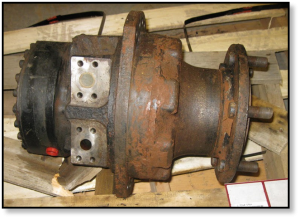
One type of leak may involve hydraulic fluid. Hydraulic fluid is thinner, with a consistency similar to that of brake fluid. If your leak is indeed hydraulic fluid, then you either have a hose leak or a problem in the hydraulics section of your final drive. One of most common causes of a hydraulic leak is a clogged case drain filter. A clogged case drain filter can cause the internal seals to blow and the final drive to start leaking hydraulic fluid.
Leaks on the Planetary Side of a Final Drive
The presence of a thicker fluid would point to leaking gear oil, which indicates the leak is on the planetary side of the final drive (where the gear system is located). This type of leak can usually be detected when you notice dripping on the inside of the track itself.
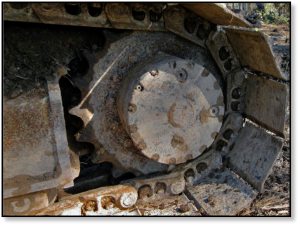
Problems in the planetary side are usually accompanied by severe grinding noises, and the travel motor may lock up. If your track drive is leaking oil near where the sprocket mounts, this will probably indicate that the mechanical face seal (also known as the floating face seal or duo-cone seal) has failed. This needs to be replaced ASAP, because if gear oil can get out then debris can get in. Debris in your final drive means a costly repair.
Note, however, that on average there are about two quarts of gear oil contained in the front of the drive: a very large quantity of fluid would indicate a problem with the hydraulics rather than on the planetary side.
Is it Gear Oil or Hydraulic Fluid That's Leaking?
How to Identify the Leak: Hydraulic-Side vs. Planetary-Side Leaks
What to Do Next
Once you've figured out which type of leak you're dealing with, your next steps look pretty different depending on where it's coming from.
If It's a Hydraulic-Side Leak
- Check the case drain filter first — a clogged filter is one of the most common causes, and one of the cheapest fixes.
- Inspect hose fittings and connections before assuming the final drive itself has failed.
- You can usually keep working short-term while you diagnose it, but don't ignore it. A slow leak means falling fluid levels, and low fluid is one of the leading causes of cavitation — a separate problem that does its own damage from the inside out.
- If topping off fluid doesn't stop the leak, it's time for a closer inspection.
If It's a Planetary-Side Leak
- Stop operating the machine as soon as you can. A failed face seal means debris can get in, and every hour you keep running it increases the odds you're looking at a full rebuild instead of a seal replacement.
- Check your gear oil level. If it's dropping fast, that confirms a seal failure rather than normal wear.
- Don't just top off the oil and keep going — that masks the real problem while contaminants keep working their way in.
- Grinding noises or a locking travel motor mean stop now, not "finish the job first."
When to Call a Professional
If you're not sure which type of leak you've got — or you just want a second opinion before it turns into a bigger repair — give us a call at 281-259-5267. We can help you pinpoint the source and get you the right parts or repair path before a simple leak turns into a catastrophic failure.
Conclusion: Never Neglect Final Drive Leaks
Regardless of whether your problem is on the hydraulics side or the planetary side, it needs to be attended to before severe damage occurs. Never neglect those leaks! And remember that we always leak test our final drives before we send them out.